AI has already claimed its seat at the innovation table — and it didn’t even knock. It barged in, armed with large language models (LLMs) like GPT-4, reshaping how companies ideate, prototype, and solve problems.
With astonishing speed and minimal cost, these tools are outperforming humans in tasks ranging from code generation to business model design. So, here’s the billion-dollar question: if AI can already outperform human crowds in many areas, is traditional crowdsourcing about to die?
A compelling study by Boussioux et al. (2024), titled “The Crowdless Future? Generative AI and Creative Problem Solving,” puts this debate into sharp focus. Their experiment pitted human-generated business ideas against those created using a human-AI hybrid approach. The results? AI-assisted solutions, especially when guided through strategically refined prompts, scored significantly higher in value, including financial and environmental impact, and overall quality. And they came with a price tag of just $27 compared to over $2,500 for the human-only submissions.
Translation? AI isn’t just good at creative problem-solving. It’s lean, scalable, and often better than the crowd, at least when measured by implementation potential and perceived value.
But if AI is that efficient, why aren’t we declaring the death of crowdsourcing right now?
While AI may outpace us humans in cost and consistency, there are at least four powerful reasons why traditional human crowdsourcing is far from obsolete.
Novelty: The Spark of the Unexpected
Boussioux et al. found that human-generated ideas consistently ranked higher in novelty, especially at the upper end of the scale. In other words, when you’re looking for that one-in-a-million idea — the weird, wild, breakthrough concept that no dataset can predict — humans may still have the edge.
AI models, no matter how advanced, are trained on what has been, not what could be. Their “creativity” is fundamentally synthetic — it’s a remix of the past. Human crowds, on the other hand, bring serendipity, fringe thinking, and unpredictable combinations. And in innovation, sometimes it’s one crazy idea, not a dozen “good” ones, that changes everything.
Ownership: Who Gets the Credit (and the IP)?
With AI-generated content, the question of intellectual property is still a legal and ethical minefield. If an LLM produces a groundbreaking idea based on prompts from your team, who owns the output? Your team? The model’s creators? The crowd of internet texts that the model was trained on?
Crowdsourcing sidesteps this ambiguity. A human contributor generates a breakthrough idea and signs an agreement transferring all IP rights to this idea to the crowdsourcing campaign sponsor in exchange for a reward, all in a legally transparent and unambiguous way. For organizations wary of future legal headaches, sticking with human solvers may feel like a safer bet, at least until AI governance frameworks catch up.
Marketing Value: Crowdsourcing as Innovation Theater
Let’s be honest: not all crowdsourcing is about getting the best ideas. Sometimes, it’s about signaling. When a company launches an open innovation contest — say, “Reimagine the Future of Food” — it’s making a statement: We’re listening to our customers. We’re cutting-edge. We’re engaged. Investors love this!
An AI prompt doesn’t generate press releases, Instagram buzz, or goodwill. But a vibrant campaign with real people submitting ideas does. For companies looking to boost their image as forward-thinking and innovative, the crowd still offers a potent narrative tool.
Community: It’s Not Just About the Ideas
Crowdsourcing doesn’t just produce solutions — it builds communities. When done right, it creates a network of passionate participants who care about a problem, become brand advocates, and sometimes even co-founders of spinoff ventures.
AI, by contrast, is transactional. It doesn’t care. It doesn’t get excited. It won’t show up at your hackathon or promote your brand on social media. That human energy — the sense of being part of something bigger — is still irreplaceable.
So, will AI replace crowdsourcing?
In many ways, it already has — for tasks where speed, scale, and strategic value matter most. But for organizations chasing radical novelty, craving emotional connection, or navigating uncertain legal waters, the human crowd still has a job to do.
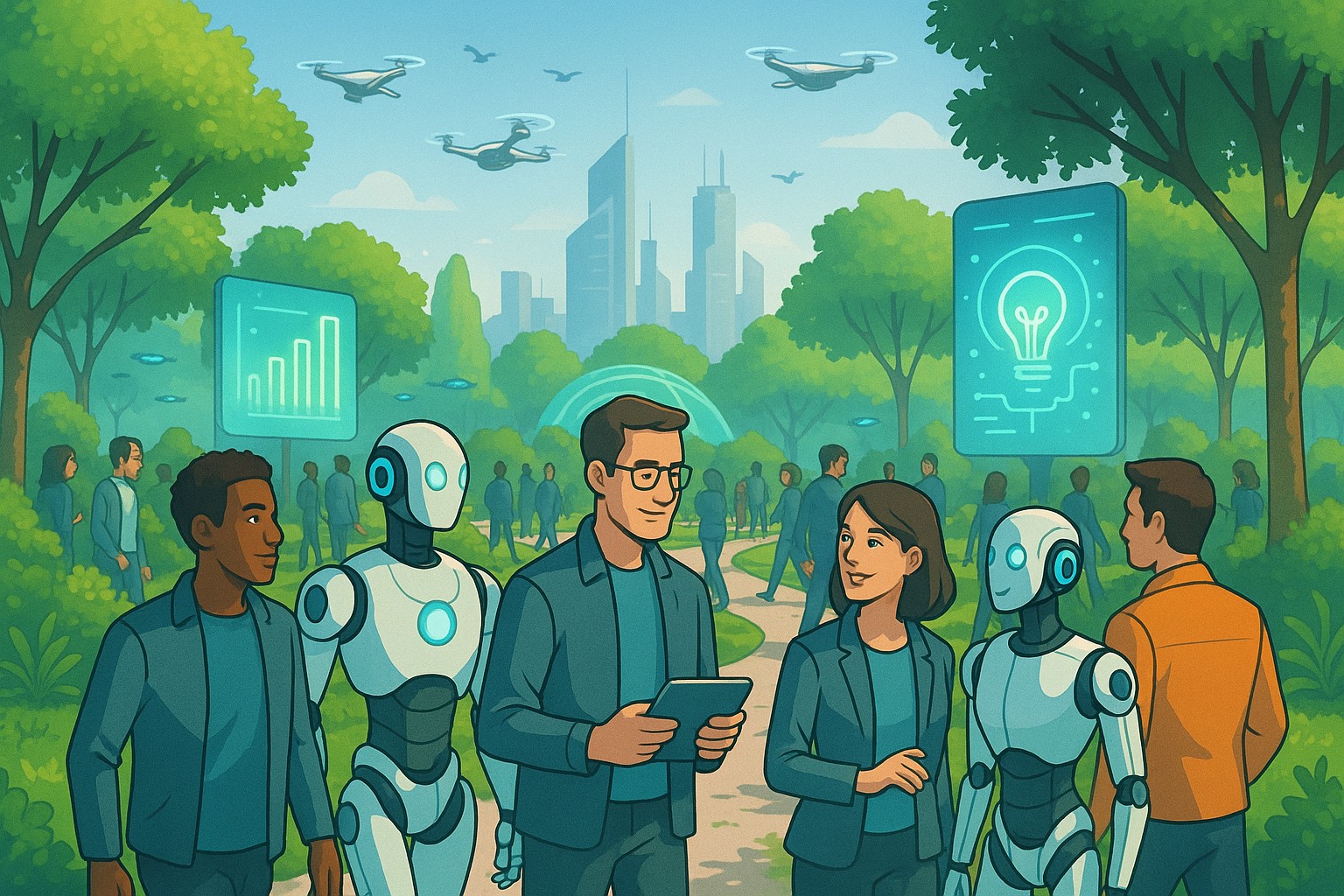
Maybe the future isn’t crowdless — it’s crowdsmart. A hybrid world where AI augments, not replaces, the wisdom of the crowd. Where LLMs help us sift, refine, and accelerate, but humans still supply the spark.
In the end, it’s not AI vs. the crowd. It’s AI + the crowd. And when those two forces align, innovation doesn’t just scale — it soars.
Bold claim? Perhaps. But when the sparks fly from both silicon and soul, that’s when real innovation begins.

 innovationobserver.com