How to Build Your Innovation Dream Team?

The image was created with the help of Microsoft Designer

This piece has been originally posted to Medium.

You can hear this time and again: innovation is all about people. Even if you’re a great fan of AI, you’d hardly expect robots to replace human innovators any time soon. And if you also love another popular cliché, the one saying that innovation is a team sport, you arrive at a natural conclusion that to pursue a corporate innovation project, you need a dedicated innovation team.

Do you need an innovation team?

Or perhaps not. Many people believe that “innovation is everyone’s job” and argue that any structure kills creativity and stifles innovation. Worse, the idea that “innovation is everyone’s job” is alive and well in some organizations. (I happened to work for one.)

Why? Because this allows corporate leadership to adopt a hands-off approach to innovation. No need to formulate the company’s innovation strategy and identify key business problems to solve. No need to design and implement specific innovation programs. No need to create a reward and recognition system that would incentivize employees’ engagement in innovation activities.

Instead, corporate leaders announce an open season for “ideas,” launch an innovation hackathon or two, and then claim that the collective wisdom of the whole company has been harnessed. (Ironically, helping this hands-off approach to innovation survive is the proliferation of easy-to-use innovation management software.)

Fortunately, more and more corporate leaders understand the need and the value of creating a dedicated innovation team. Of course, every employee should ideally take part in innovation projects, but it’s the ultimate responsibility of the innovation team to take ownership of the whole process. Besides, anyone with even a passing knowledge of how corporations work knows that when everyone is responsible for something, no one is.

And then, a crucial question arises: how to build your innovation dream team?

A few approaches exist.

Innovative people for innovation teams

The first approach emphasizes the personal skills of the team members. That’s why you can sometimes hear that the best way to staff your innovation team is to hire…innovative people. Great advice, of course, but unfortunately, with limited practical value.

This is not to say that more specific recommendations are unavailable. For example, Soren Kaplan suggests looking for these five qualities when recruiting new members of innovation teams:

§ Leapfrogging mindset: a desire to view the world with the goal to change it.

§ Complementary knowledge: possessing the knowledge and expertise that is complementary to what already exists in your organization.

§ Strategic relationships: bringing along a strong network of business partners.

§ Ambiguity tolerance: the ability to make decisions based on limited data.

§ Optimistic persistence: the ability to persist through tough times.

I like these suggestions, I really do. However, I suspect that most corporate HR departments, even those equipped with advanced evaluation tests, will have trouble finding enough candidates to meet such a high standard.

When a revolutionary meets a magic maker

The second approach pays less attention to the skill set of individual team members; instead, it emphasizes the need for their optimal mix. This approach focuses on the functional roles each member of the team plays in the project. To this end, Braden Kelley suggested that each innovation team should include nine personas, of which the following five are, in my opinion, the most important:

§ Revolutionary: a team member generating and sharing ideas.

§ Connector: a team member bringing people together.

§ Customer Champion: a team member responsible for interactions with customers.

§ Magic Maker: a team member responsible for implementing novel ideas and solutions.

§ Evangelist: a team member creating a buzz about the project and its results within the organization.

(The other four roles are ConscriptArtistTroubleshooter, and Judge.)

This approach is obviously more practical than the first. In fact, many organizations have already adopted the spirit, if not the exact letter, of it by creating innovation joint task forces composed of representatives from different corporate units and functions: R&D, sales, marketing, customer service, finance, legal, etc.

Implicit in the formation of such innovation teams is the understanding of the importance of including people with diverse professional expertise and experience.

In recent years, the concept of functional diversity has been solidified by a growing body of evidence suggesting that socially diverse groups (i.e., those with a diversity of gender, race, ethnicity, and sexual orientation) are more innovative than socially homogeneous groups. Research shows that socially diverse groups are better at solving complex problems not only because people with different backgrounds bring new information, but also because the mere presence of individuals with alternative viewpoints forces group members to work harder to sharpen their own arguments.

This is good news for HR managers in charge of creating innovation teams. In our rapidly globalizing business environment, bringing together people with diverse professional and social attributes is much easier than chasing individuals with nebulous qualities such as leapfrogging mindset.

It’s all about the process

There is the third approach to the formation of innovation teams. This approach doesn’t dwell on the team composition or individual skills of its members; it emphasizes the way the team operates.

The logic behind this approach was eloquently articulated in a 2015 article by Google’s Julia Rozovsky. The article argued that the composition of a team mattered much less for its success than how the team members interacted, structured their work, and viewed their contribution. The article listed five key factors that set apart successful Google teams:

§ Psychological safety: team members take risks without feeling insecure or embarrassed.

§ Dependability: team members count on each other to do high-quality work.

§ Structure & clarity: teams have clear goals, roles, and execution plans for each member.

§ Meaning of work: team members are working on something that is personally important to them.

§ Impact of work: team members believe that their work matters.

Interestingly, it’s the first factor, psychological safety, that was by far the most important of the five. The safer team members felt with one another, the more likely they were to admit mistakes, work together, and take on new roles — and this obviously positively affected every aspect of their work.

The very notion that innovation requires taking risks without fear of negative repercussions is hardly new. We all used to hear calls to “fail fast and often” (or even to “celebrate failures”) as a surrogate invitation to innovate. However, as I argued before, while voiceful in advocating risk-taking, relentless experimentation, and learning from mistakes — all being parts of the elusive “culture of innovation” — companies often fail to introduce specific corporate policies encouraging such behavior.

From words to deeds

Based on my research of factors boosting innovation, I’d like to propose a few specific recommendations for building corporate innovation teams:

1. Create a brand-new team for each strategic innovation project and adopt a modular approach to the formation of innovation teams.

To avoid groupthink, I recommend creating a brand-new team for each strategic innovation project. This may result in the project’s slower start; however, the benefits of the cognitive diversity brought by new members will eventually outweigh the cost of the initial delay. I further recommend that each innovation team include members of the core innovation team (thoroughly trained in innovation management tools) and outsiders from different units, functions, and locations. Naturally, this modular approach requires the creation of a firm-wide repository of employees with a track record of involvement in innovation activities. At some point, such a repository should start collecting data assessing the innovation skillsets of prospective team members and their optimal functional roles within the team.

2. When creating innovation teams, use a mix of subject-matter experts in the project’s domain and non-experts in this specific area.

This recommendation takes a cue from a 2016 study that showed that the high ratio of domain experts on corporate boards resulted in poor performance of respective firms. The major problem with having too many domain experts on the board was “cognitive entrenchment,” the inability of expert-dominated boards to effectively respond to new information, especially when faced with an increased level of uncertainty. (And an increased level of uncertainty is what innovation is all about!) Of course, the optimal ratio of SMEs vs. non-experts needs to be determined empirically, but for longer-term projects, it can be periodically adjusted.

3. When creating an innovation team for customer-oriented projects, include team members with demographic characteristics mirroring the ones of the prospective end users.

This recommendation is inspired by a 2013 report by the Center of Talent Innovation that found that when innovation teams had one or more members of the same gender, ethnicity, culture, age, or sexual orientation as the project’s target end user, the entire team was far more likely to understand this user’s needs, which increased the likelihood of success.

4. Place members of the innovation team — especially those involved in strategic innovation projects — on fixed-term (tenure-like) employment contracts, as opposed to employment at will.

This proposal is based on multiple studies (reviewed here) showing that the labor laws that make it more difficult to fire employees increase their participation in corporate innovation activities. The idea here is to provide members of the innovation team with immunity from failure for the whole duration of the innovation project, a bureaucratic equivalent of providing them with psychological safety.

5. Make stock option grants, as opposed to cash bonuses and other monetary or non-monetary rewards, the principal incentive for engaging employees in innovation projects.

This proposal is based on a 2015 finding that firms that offer stock options to non-executive employees are more innovative. This proposal, as the previous one, is based on a theoretical framework created by Gustavo Manso, who postulated that the optimal incentives motivating employees to innovate must include a combination of tolerance for failures in the short term and reward for success in the long term.

Of course, there is no guarantee that any of the proposed recommendations, especially taken alone, would result in an immediate positive outcome. But if you believe, as I do, in the importance of experimenting, then experimenting with the way you build your innovation team is a good place to start. Who knows, you may discover that the number of innovative people in your organization is larger than you expected.

Posted in Creativity, Diversity, Innovation | Tagged , , , , , | Leave a comment

Freedom to Innovate

This image was created with the help of Microsoft Designer

This piece has been originally posted to Medium.

Did you realize that one of the most important drivers of innovation — and the one that draws surprisingly little attention — was freedom? Yes, freedom.

I came to this conclusion while analyzing specific socio-economic factors affecting innovation. Freedom emerges as a common denominator for the factors that boost innovation. In contrast, restrictions on liberties have a chilling effect on the corporate innovation process.

There are three major levels at which freedom affects innovation: individual, organizational, and national.

Freedom from discrimination

Have you heard about employment nondiscrimination acts (ENDAs)? These are US state-level laws that prohibit discrimination based on sexual orientation and gender identity. A 2016 study showed a significant increase in the number and quality of patents obtained by firms headquartered in US states that have passed ENDAs compared to the states that have not. The result was more pronounced for the states with a large LGBTQ+ population and for firms in human capital-intensive industries, such as technology and finance.

Another study, published in 2018, pointed to a positive effect on the innovation of two social liberalization policies: the legalization of medical marijuana and same-sex marriages. In contrast, the laws imposing additional restrictions on abortion had a negative effect on innovation in the states that adopted such legislation.

No, I’m not saying that people smoking weed or belonging to LGBTQ+ communities are intrinsically more innovative. My point is that innovation implies a certain level of individual freedom, including freedom from being discriminated against for whatever reason.

The labor laws of innovation

Theoretical analysis conducted by Gustavo Manso in 2011 suggests that conditions incentivizing employees to innovate must include tolerance for early failures. This allows corporate innovators to take risks at the initial stages of the innovation process — when the rate of unsuccessful experiments is especially high — without facing negative consequences for failed projects.

Available empirical evidence supports Manso’s conclusion. For example, an analysis of the impact of labor laws on innovation in five countries showed that stronger labor laws positively correlated with a country’s innovation output.

Another study investigated the impact on innovation of the wrongful discharge laws (WDL) in the United States. These laws provide employees with greater protection than employment at will, a common arrangement under which employees can be terminated with or without just cause. The WDL, particularly those that protect employees from termination in bad faith, were found to foster innovation by increasing the employees’ motivation and effort.

These results strongly suggest that innovation is promoted by laws that limit firms’ ability to discharge employees at will. Experts call this phenomenon an “insurance effect”: feeling increased protection from the negative consequences of failure, employees are more committed to engaging in risky innovative projects. I would argue that providing employees with immunity for failed innovation projects (i.e., with freedom from being fired, so to speak) might be a better way to promote innovation than by “celebrating failures.”

Interestingly, corporate innovation is helped by protecting not only individual employees but firms too. A study of bankruptcy laws in 12 countries showed that more debtor-friendly bankruptcy codes (i.e., codes favoring firms filing for bankruptcy) had a positive effect on corporate innovation. The debtor-friendly laws are thought to encourage firm-level innovation by keeping the firms’ innovative activities alive even at bankruptcy.

Innovation and political freedoms

There is one more level of influence that is almost never considered: the level of a country’s political freedoms.

I first came across this point in 2014 while reviewing the 2013 Global Innovation Index that ranked the innovation capabilities of 142 countries by using 84 indicators, which included, among others, the quality of higher education, availability of venture capital, and government support.

Even a brief look at the Index led me to a curious observation: the top of the ranking was heavily populated by countries representing established, mature democracies. The reverse was also true: the bottom of the Index was stacked with countries with an abysmal level of democratic development.

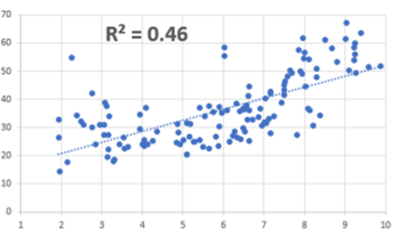
To give this observation some statistical support, I later used the data from the 12th (2019) edition of the Global Innovation Index that analyzed the global innovation performance of approximately 130 economies (Y-axis) and plotted it against the political freedom rankings taken from the Democracy Index 2019 (X-axis). In the latter case, the countries were measured on a scale of 0 to 10.0, marking them as authoritarian regimes (0–4.0), hybrid regimes (4.0–6.0), flawed democracies (6.0–8.0), and full democracies (8.0–10.0).

The results of the regression analysis are presented below:

A reasonably strong correlation does exist indicating that the ability of a country to innovate positively correlates with the level of political freedoms in this country. To use a more straightforward language: free countries innovate better.

Some actionable recommendations follow.

To promote innovation at the first level, manifested as freedom from being discriminated against for whatever reason, organizations should energize their diversity and inclusion programs.

Promoting innovation at the organizational level appears even more straightforward as firms can protect their innovators by modifying termination policies.

To be sure, individual firms may have a limited influence over a country’s level of political freedom. And yet, every firm can — and should — make its voice heard every time our liberties are in danger, be it around the globe or in a neighboring state.

Posted in Diversity, Global Innovation, Innovation | Tagged , , , , | Leave a comment

The “culture of innovation”: a misnomer or oxymoron?

This image was created by Tatiana Ivanov

This piece has been originally posted on Medium.

I’m amazed at our near obsession with the so-called culture of innovation, a topic whose popularity in business literature and social media can only match the extreme fuzziness of its meaning.

Have you ever heard about companies trying to establish a “culture of accounting”? Nope. They simply follow solid accounting practices. Have you ever heard about companies trying to establish a “culture of quality”? Nope. They adopt the Six Sigma methodology. And what about the “culture of sales,” “culture of marketing,” or “culture of talent management”? Nope, nope, and nope.

It’s only innovation that, in the minds of many, requires a “culture” to exist. Why?

I see two reasons. The first one is that we still don’t consider innovation a normal corporate process, on par with accounting, quality control, marketing, or talent management. We’re often even unsure of what corporate innovation is, as a surprisingly large number of firms don’t have a working definition of what innovation means for them. We hardly bother to understand the difference between incremental, adjacent, and radical innovation and believe that every innovation must be disruptive, while all other types are for losers.

A non-stop talk about the “culture of innovation” becomes a replacement for the lacking corporate innovation strategy.

The second reason is that while many CEOs have mastered the art of talking about innovation, by delivering polished answers to friendly interviewers, a frighteningly large number of them take a hands-off approach to developing innovation strategies and establishing innovation processes. Worse, too many CEOs don’t consider overseeing innovation part of their responsibilities, proudly claiming instead that “in our company, innovation is everyone’s job.”

A non-stop talk about the “culture of innovation” becomes a handy filling of the leadership void.

I believe that the very term “culture of innovation” is a misnomer, if not an oxymoron.

I believe it’s time to stop “failing fast and often” and “celebrating failures” — the two most popular components of building the “culture of innovation” — and begin to design and implement actionable corporate policies boosting innovation.

There is no need to reinvent the wheel; specific socio-economic factors affecting innovation have long been described in business literature. Here I present a list of some of them organized into two groups: innovation dos (boosting innovation) and innovation don’ts (obstructing innovation).

Innovation dos

· Stricter labor laws, such as the 1988 Worker Adjustment and Retraining Notification Act (Acharya et al., 2010); wrongful discharge laws (Acharya et al., 2013); and employments nondiscrimination acts (ENDAs) (Gao and Zang, 2016)

· Legalization of same-sex marriages and medical marijuana (Vakili and Zhang, 2016)

· Diverse workforce and pro-diversity corporate policies (Hewlett et al., 2013Mayer et al., 2016)

· Family enterprise ownership (as opposed to public ownership) (Kammerlander and van Essen, 2017)

· Debtor-friendly (as opposed to creditor-friendly) bankruptcy laws (Acharya and Subramanian, 2009)

· Greater use of long-term financial incentives, such as stock-option grants, to compensate employees involved in innovation activities:

o At the CEO level (Francis et al., 2011)

o At the level of heads of corporate R&D (Lerner and Wulff, 2006)

o At the level of non-executive employees (Chang et al., 2015)

· Better treatment of employees, as measured by:

o The KLD Socrates database (Chen et al., 2016Mao and Weathers, 2016)

o The MSCI ESG STATS database (Mayer et al., 2016)

Innovation don’ts

· Restrictions on abortions (Vakili and Zhang, 2016)

· Creditor-friendly (as opposed to debtor-friendly) bankruptcy laws (Acharya and Subramanian, 2009)

· Unionization (Bradley et al., 2015) (but see discussion in Doucouliagos, 2017 below)

· Income inequality (Doucouliagos, 2017)

· Initial public offerings (IPO) (Bernstein, 2017)

You could argue that some of the factors listed above, such as employment, bankruptcy, and abortion laws, are largely out of corporate control.

Yet, both corporations and policymakers should consider the local legal environment when choosing the location of future innovation centers. For example, an idea is floating to create up to 10 regional innovation centers in the Midwest metro areas of the United States with the infusion of about $100 billion of federal money in the form of direct R&D funding, tax benefits, and infrastructure support. Alarmingly, many of these prospective centers are planned to be built in the states that have recently adopted the most restrictive abortion laws in the country. Will these innovation centers be able to innovate?

Legal issues aside, companies can boost corporate innovation by modifying their termination and compensation policies, something that is entirely under their control. Here, I propose two specific recommendations based on a theoretical framework created by Gustavo Manso in 2011:

1. Place employees involved in strategic innovation projects on fixed-term employment contracts (as opposed to employment-at-will). Alternatively, tenure-like positions can be created for these employees. Whatever the arrangement, the employees should be assured that they have a fixed “window of opportunities” — say, three to five years — to make progress before any administrative decisions regarding their performance will be taken.

2. Make stock option grants the principal incentive for engagement in innovation projects — as opposed to cash bonuses or non-monetary rewards.

A larger point that I’d like to make is that corporate innovation begins not with a “culture,” but with structure and processes. And after you created the structure, implemented the processes, and spent years running various innovation programs, while communicating their results to the rest of the company, a habit of innovation may emerge.

And if you want to call this habit a culture, fine with me.

Posted in Innovation | Tagged , , , , , | Leave a comment

The Holidays We Celebrate

I remember my first Christmas. I was thirty-six back then.

On a dark, frosty morning of December 15, 1990, my family (my wife and two little kids, aged two and three) and I left St. Petersburg, Russia, and flew to France. I had a six-month research grant to work in a lab in Orsay, a scientific hub southwest of Paris.

The first few days in France were stressful. We moved into a rented apartment, opened utility accounts, and learned ways to move around and buy groceries—none of this being easy, given our lack of French. Besides, our son, apparently shocked by a sudden change in the environment, stopped eating normal food and subsisted on baguettes and sugar.

In the meantime, France was gearing up for Christmas. We didn’t celebrate Christmas in Russia—the New Year with its decorated trees and presents being the major holiday of the season—so the intensity of Joyeux Noel themes and decorations on the streets and in store windows was amusing and even puzzling. But we didn’t have time to think about that.

On Christmas eve, we were invited for dinner at my French boss’s house. In the sitting room, we discovered a tree with real candles lit up. Despite our hosts’ assurance that it was perfectly safe, I spent the rest of the evening watching the tree and ready to fight a fire.

At dinner, my boss’s daughter persuaded our son to try oysters; that had ended his self-imposed hunger strike. He’s been a devoted consumer of oysters ever since.

On parting, my boss told me, with all the strength he, a charming French, could muster: “Don’t even think of showing up in the lab until January. I don’t want people in the building gossiping that I exploit foreigners.”

On our way home, I said to my wife: “Look, we deserve this vacation. Tomorrow, let’s buy a tree—I know a place—and celebrate the New Year as we always do.”

Early next morning, with the kids still sleeping, we left our apartment and went to our supermarché. The absence of people on the streets surprised us. We turned the corner and, to our horror, saw that the lights in the supermarché were out; it was closed.

Refusing to believe our eyes, we reached the place where, a couple of days before, I had seen Christmas trees on sale. The place was empty; a few green needles remained on the neatly swept pavement.

My holiday was stolen from me. I felt devastated. I felt mugged. I felt robbed.

It was my wife, as usual, who rescued us. She found somewhere a large, faintly smelling fir branch, decorated it with a few ornaments (already on post-Christmas sale), and we had our well-deserved New Year family celebration—just the four of us.

My grant had been extended, and we celebrated our next Christmas still in France—as the French: a Christmas tree (no candles, though), good food, champagne, and a lot of gifts for the kids. In the summer, we moved to the United States and celebrated our first Christmas here. Then again, and again. Celebrating Christmas has become a habit, then the favorite holiday of the year. 

I’m not a religious man. For me, celebrating Christmas simply means sharing the spirit of joy with the people around me. I would celebrate Hanukkah or Ramadan if I lived in a Mid-Eastern country. As I would celebrate Thanksgiving on the second Monday in October if I lived in Canada. As I celebrate Cinco de Mayo with my daughter-in-law, who is Mexican.

So, if someone somewhere in the world asks me, “Are you going to celebrate this holiday with us?”, my response will be instant: “I’m game!”

Merry Christmas to everyone who celebrates it!

Image credit: https://countryskillsblog.com/2012/12/20/light-em-up-candles-in-christmas-trees-blog-advent-20/

Posted in Uncategorized | Tagged , , , , | 1 Comment

The Questions We Answer

As a Russian-American, I’m used to answering questions about Russia. Most of them are mundane, revolving around the same theme: how much does it cost to buy this or that in Russia? Apartment prices usually attract the bulk of attention. My notion that these prices can dramatically vary between Moscow and, say, a small city in Siberia usually meets with an incredulous stare. A claim that most Americans wouldn’t afford an apartment in some neighborhoods in Moscow stuns many people.
 
There are, of course, questions about politics. After being asked a zillion times what I think about Putin, I now deliver a response as polished as a professional elevator pitch. (Sorry, I can’t reproduce it here.) I also remember a question that made me almost speechless: “Was your last czar (Nicolas II) also president?” Hmm, no, he was not.
 
This time of the year, questions turn to Thanksgiving. Do they celebrate Thanksgiving in Russia, and if not, why? My honest attempts to argue that Thanksgiving is rooted in the events in American history that had never happened in Russia usually go nowhere; my interlocutors seem to feel that I’m simply dodging the question.
 
So, one day, I decided to try something different. When asked by an academically looking gentleman at a party why they do not celebrate Thanksgiving in Russia, I answered: “Because the Russian government is so incompetent that it can’t provide a turkey to every Russian family.” The gentleman nodded approvingly, visibly impressed with the depth of my analysis.
 
Happy Thanksgiving to all my American friends and colleagues!

Image credit: https://www.news9live.com/art-culture/how-new-england-first-thanksgiving-plays-a-role-in-america-origin-story-136294

Posted in Uncategorized | Tagged , , | Leave a comment

Do Wars Boost Innovation?

A slightly different version of this piece was originally published on Change Logic’s Viewpoint Blog.

War is a horrible thing. Images of killed, wounded, or orphaned Ukrainian kids, victims of Russia’s barbaric aggression, leave little room for the belief that anything good can come out of a war.

And yet, some believe that wars boost innovation.

Invented or adopted?

One of the most common arguments in support of “war-driven” innovation is the surge in technology patents in the United States in the aftermath of World War II. To stimulate war-related research, the U.S. government made a massive infusion of federal R&D money (to the tune of $7.4 billion in today’s dollars) in the early 1940s. What followed was a nearly doubling in patent filings in technological areas and geographic locations that received the funds.

It’s also popular to tout now common innovations that came out of development during WWII. Take, for example, penicillin. Providing soldiers with antibiotics was a major priority for the U.S. military, which drove the drug’s manufacturing and distribution. After the war, penicillin became available to civilians too.

Or take radar, another poster child of “war-driven” innovation. Originally, it was intended to be used as an anti-aircraft weapon, but as such, it proved useless. Later, radar was adjusted to detect enemy ships and planes; it’s in this detection capacity that we use radars today.

One should remember, however, that neither penicillin nor radar was invented during WWII: penicillin was discovered in 1928, and the first radar system was built in 1935. The war just highlighted the urgent need for both innovations and sped up their adoption.

Necessity as the mother of invention?

The belief that wars can boost innovation seems to come from a more general notion that innovation benefits from crises (war being arguably an extreme case of a crisis). The idea here is that crises generate acute unmet needs that must be immediately fulfilled.

Indeed, Iowa State University’s Matt Clancy points out that not only WWII but other major crises, such as the oil shock of the 1970s and the Covid-19 pandemic, led to a spike in patents aimed at dealing with the consequences of these crises. For example, the Covid-19 outbreak stimulated a sharp increase in the number of clinical trials targeting anti-Covid medications (vaccines, drugs, and testing protocols). In parallel, there was a dramatic surge in patent applications related to remote work that became so widespread across the country during the pandemic.

However, Clancy is quick to add that you can’t invent a technology only because there is a need for it; you need prior knowledge too. It’s, therefore, worth pointing out that fundamental discoveries that formed the basis for the Covid-19 vaccine development were made 15-20 years ago. The Covid-19 crisis didn’t invent the vaccines—knowledge was already there—it only facilitated their speedy adoption. And let’s not forget that the U.S. government has forked a hefty $20 billion on their development, something that doesn’t happen for “every day” innovations.

Crises are usually short-term events; innovation, in contrast, takes time. There is simply not enough time to invent anything truly important during a crisis. What crises do accomplish is that they overcome cognitive and bureaucratic resistance to the adoption of new technologies and business models. Remember telemedicine? It was hyped up for decades prior to the pandemic, but the adoption was blocked by doctors and insurers. Telemedicine came to the forefront of the healthcare system not because the pandemic invented it, but because it helped clear regulatory barriers.

Innovation requires freedom and prosperity, not poverty and desperation

Renowned author Matt Ridley is another opponent of the concept of “war-driven” innovation. In his brilliant book How Innovation Works, Ridley argues that “innovation happens when people are free to think, experiment and speculate. It happens when people are relatively prosperous, not desperate.”

Ridley makes another good point: “The main ingredient in the secret sauce that leads to innovation is freedom…Innovative societies are free societies.” This sentiment echoes my own analysis showing a strong positive correlation between the innovative potentials of world countries and the level of democratic development in these countries.

Crises and wars are bad for innovation because they bring suffering, fear, and desperation—and do very little, if anything, to strengthen democratic institutions. Yes, desperation can be a powerful stimulus to break a bureaucratic wall—paving the way to a previously “suppressed” innovation—but it provides a poor intellectual environment for creative thinking.

Innovation’s true triggers

The available historical data shows that the number of wars has dramatically fallen over the past 80 years. Do we see any drop in the number and quality of innovations? What an absurd idea!

Fortunately for all of us, innovation is driven not by warriors, but by explorers. It’s their intellectual curiosity and the drive for change that brings new products and business models to the marketplace.

Take, for example, Sara Carvalho at Bosch. Her inspiration to start a venture came to her not on a battlefield, but on a hiking trip in Peru. Sara was saddened by the inability of the people who hosted her to have something she would take for granted—a hot shower. To address the problem, Sara developed a concept to provide reliable sources of hot water in developing countries using a mobile phone payment system.

Or take Krisztian Kurtisz, once the local manager for UNIQA, a large insurance company in Central and Eastern Europe. Living in peaceful Budapest, Hungary, Krisztian saw no looming crises on the horizon. But he was concerned that the insurance industry was losing its original purpose as a community effort of helping those in need. As a result, he created Cherrisk, a venture that is disrupting the insurance business.

Sarah and Krisztian are not alone. They are part of the growing cohort of Corporate Explorers, innovators who build disruptive ventures within existing corporations. They’re successful because they know how to bring together individual creativity and resources available at large companies. They will further succeed because they have the skills and passion to change the world for the better.

Of course, we all heard this: never let a good crisis go to waste. Crises do and will happen, and we must learn how to use them to challenge assumptions and find new, more effective ways to do business. But we also must learn to be creative and innovative every single day, without waiting for an extreme event to give us “permission to innovate.”

Image credit: Kevin Schmid on Unsplash

Posted in Global Innovation | Tagged , , , , , , , , , , , | Leave a comment

Will the Women Innovators Please Stand Up?

My wife often complains that her hairdryer was designed by a bunch of bold males. True, it produces a stream of hot air. But the control buttons on the handle are arranged in such a way that the device is impossible to operate with one hand (with the other holding a brush).

Given a chance, will my wife buy a hairdryer designed by a team that includes female inventors? Absolutely.

She isn’t alone. A 2019 study by Einio et al. finds that consumer products that have a higher share of female inventors are disproportionately purchased by female households.

Einio et al. used a Nielsen database that tracks purchases of packaged consumer goods identified by bar code. For each consumer household, Nielsen records race, income, education, and family structure. They identify the manufacturers associated with each bar code and match them to patent data on the inventor of the product (or to information on venture-backed startups in Crunchbase).  

The authors find that:

  • Female inventors are more likely than male inventors to work in industries catering to women. 
  • Female inventors are more likely to develop new products and technologies that appeal to women, as compared to male inventors. 
  • Female-founded startups have a higher female market share relative to their male counterparts and more often sell to female-led households. 
  • Startups funded by female VCs are more likely to have a large population of female users.

(I also found it interesting that female inventors are more likely than male inventors to produce “green” patents, i.e., patents with a positive environmental impact.)

Consumer goods are not the only example of this trend. Koning et al. studied the gender composition of research teams working in the biomedical field. They show that research teams including women are 19% more likely to produce patents that focus on women. This effect was even stronger, 26%, when female researchers lead their teams.

In other words, more women inventors and entrepreneurs mean more value.

Representing about 51% of the U.S. population, women drive 70-80% of all consumer purchasing. And yet, according to Einio et al., only 12% of patent inventors are women, and only 24% of startups in the consumer-packaged goods industry have at least one female founder. (The rate of female VC partner involvement is even lower, around 5%.)

As a result, innovation teams composed of bold men keep churning out monster hairdryers that their main consumers, women, hate.

So, when we argue that women should be better represented on corporate innovation teams, it’s not an attempt at social engineering or affirmative action in disguise. It’s a sensible innovation strategy.

p.s. The title of this post was inspired by Eminem’s performance at the Super Bowl 2022 halftime show.

Image credit: Christina @ wocintechchat.com on Unsplash

Posted in Diversity, Health Care, Innovation | Tagged , , , | 1 Comment

Dose Is Everything: How Religious Diversity Affects Performance

The idea that diversity boosts corporate performance and innovation is becoming mainstream.

So far, the focus of attention has been mostly on factors of social diversity: the diversity of race, gender, and sexual identity.

Unfortunately, less is known about the importance of cultural diversity: the diversity of religion, ethnicity, and nationality. For example, I’m aware of only one study explicitly addressing the relation between innovation and religiosity. (I wrote about this study here).

That’s why I was excited to come across a 2016 paper by a group of Italian researchers led by Prof. Alessandro Ancarani. Ancarani et al. analyzed the performance of 66 multinational healthcare teams operating in three large hospitals in Dubai, United Arab Emirates, a predominantly Muslim country.

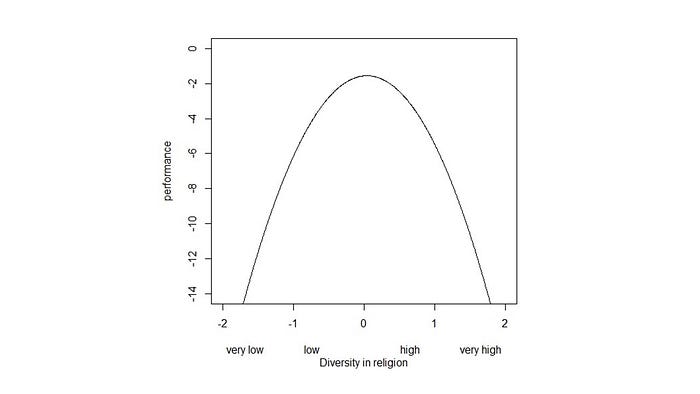
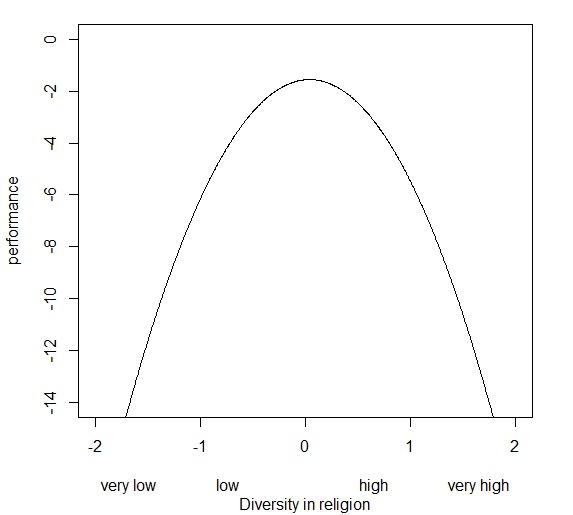
Using the proportion of Muslims vs. non-Muslims within a team as a measure of religious diversity, the authors found an inverted U-shaped relation between diversity and performance: moderate diversity was associated with higher performance, while homogeneous and highly heterogeneous teams underperformed moderately diverse ones (see the picture below, reproduced from Ancarani et al., 2017)

Interestingly, the positive effect of moderate diversity on performance was stronger for teams performing more complex tasks (e.g., surgical vs. clinical teams), which reminds me of the fact the positive effect of liberal social policies on innovation is especially strong in knowledge-intensive industries like tech.

The authors argue that there should be a “right mix” of religious diversity. A moderate degree of diversity is beneficial to the performance of the teams, adding new capabilities and perspectives. This happens when there is a dominant religious group and a smaller subgroup within a team.

However, when diversity is high, large homogeneous subgroups emerge, making communication more difficult and conflicts more likely. Supporting this last point was a finding that negative effects of high diversity can be mitigated by the presence of robust conflict resolution protocols within teams.

* * *

The particular design of the study makes it difficult to generalize its results; more research analyzing different religions, countries, and professional settings are needed.

However, I was intrigued by the notion that an “optimal dose” of religious diversity is required for better performance.

I feel the same may be happening when we observe the positive effects of social diversity. When we say that the presence of women on corporate boards improves board performance, we mean that women are usually added to the boards that are composed predominantly of men.

Do the effects of gender diversity on performance follow the same inverted U-shaped relation?

How will women-dominated boards perform compared to boards composed of equal numbers of women and men? Will the addition of a few men improve the performance of a women-only board? Will the same inverted U-shaped pattern hold in the case of racial and sexual minorities?

It will be important to have answers to these and similar questions. But regardless of the answers, one thing is clear: diversity is a powerful tool, and we need to figure out how to use it in the most effective and efficient way. 

Image credit: Noah Holm on Unsplash

Posted in Diversity, Innovation | Tagged , , , , , , , | Leave a comment

Innovating in Your Dream and With a Drink

There are a few reported approaches to boosting human creativity.

Some of them are very proper. Perhaps the most popular is taking a shower — especially if followed by going to the garden and sitting under the apple tree. Another is practicing mindfulness meditation, an action 10-12 minutes of which are claimed enough not only to reduce stress but also generate better solutions to creative problems.

Other approaches may carry a stigma with them. For example, it was reported that moderate procrastination may lead to higher creativity ratings in test subjects. The authors of the study speculate that procrastination can set in motion a mechanism of problem restructuring, which results in the production of more creative ideas.  

Procrastination is generally frowned upon in the marketplace. But in its defense, I will say that the average productivity of American workers has increased 400% since 1950; yet we’re working the same 40-hour workweek, at least on paper. Don’t we have a right to treat our brain to an occasional spell of a quiet, unrushed deliberation?

And how can we justify, on the moral ground, the fact that human creativity can be stimulated by the consumption of moderate amounts of alcohol (resulting in a blood alcohol content of approximately .075, i.e., just below the U.S. legal limit)? The authors of the respective study hypothesize that people under the influence are more susceptible to so-called mind wandering, which means losing some focus but gaining the ability to see a “bigger picture.”

As I argued before, in contrast to many narcotics or drugs, ethyl alcohol is a simple chemical molecule, whose behavior in the human body is quite well understood. Using this relatively simple model, researchers may start identifying specific neurochemical reactions in the brain that are responsible for creativity.

Recently, a new entry has been added to the list of factors boosting creativity: an interrupted nap. When people fall asleep, they first go through the nonrapid eye movement sleep stage (or N1), often described as “the twilight zone between sleep and wakefulness.” A group of French researchers showed that spending at least 15 seconds in N1 — and then being awakened — boosted the creativity of test subjects: they were significantly more likely to find a creative solution to a math problem than test subjects who proceeded past N1 without awakening or those who didn’t fall to sleep at all.

I strongly suspect that the positive effect of mindfulness meditation is realized through the same, N1-dependent, mechanism. I also suspect that alcohol stimulates creativity by chemically “firing up” the same brain structures that get activated during N1.

It’s only a matter of time that researchers identify the sections of the brain responsible for creativity — along with safe and efficient ways to stimulate them on demand. And we all will have a choice regarding how we prefer to innovate: in our sleep or with a drink.

Image credit: Mert Kahveci on Unsplash

Posted in Creativity, Innovation | Tagged , , , , , , | Leave a comment

How to Build Your Innovation Dream Team (Part 2)

In Part 1, I described two potential approaches to building a corporate innovation team. One emphasizes specific individual skills of team members, the other focuses on the optimal mix of functional roles within the team.

There is the third approach to the formation of innovation teams. This approach doesn’t pay attention to the team composition or individual skills of its members; it emphasizes the way the team operates.

The logic behind this approach was eloquently articulated in a 2015 article by Google’s Julia Rozovsky. The article argues that the composition of a team matters much less for its success than how the team members interact, structure their work, and view their contribution. The article listed five key factors that set apart successful Google teams:

  • Psychological safety: team members taking risks without feeling insecure or embarrassed.
  • Dependability: team members counting on each other to do high-quality work.
  • Structure & clarity: teams having clear goals, roles, and execution plans for each member.
  • Meaning of work: team members working on something that is personally important for them.
  • Impact of work: team members believing that their work matters.

Interestingly, it’s the first factor, psychological safety, that was by far the most important of the five. The safer team members felt with one another, the more likely they were to admit mistakes, work together, and take on new roles. The results followed.

The notion that innovation requires taking risks without fear of negative career repercussions is hardly new. We often hear calls to “fail fast and often” — or even to celebrate failures — as a surrogate invitation to innovate.

Unfortunately, while voiceful in promoting risk-taking, experimentation, and learning from mistakes, firms fail to introduce specific corporate policies encouraging and rewarding such behavior of their employees.

What can be done (or at least tried)?

Based on my research of factors favoring innovation, I’d like to propose a few recommendations on building corporate innovation teams

1. Create a brand-new team for each strategic innovation project and adopt a modular approach to the formation of innovation teams.

To avoid groupthink within innovation teams, I recommend creating a brand-new team for each strategic innovation project. This may result in a slow start of the project, due to the frictions between members of the team; however, the benefits of the cognitive diversity brought by new members should eventually overweight the cost of the initial delay.

I further recommend that each innovation team include a few members of the core innovation team (thoroughly trained in innovation management tools) and several outsiders from different units, functions, and locations. Naturally, this modular approach requires the creation of a firm-wide repository of employees with a track record of their prior involvement in innovation activities. Ideally, at some point, this repository will start collecting data allowing to judge the innovation skillsets of prospective members of the team and their optimal functional roles within the team.

2. When creating innovation teams, use a mix of subject-matter experts in the project’s domain and non-experts in this specific innovation field.

This recommendation takes a cue from a 2016 study that showed that the high ratio of domain experts on corporate boards resulted in poor performance of respective firms. The major problem with having too many domain experts on the board was “cognitive entrenchment,” the inability of expert-dominated boards to effectively respond to new information, especially when faced with an increased level of uncertainty. (And an increased level of uncertainty is what innovation is all about!) Sure, the optimal ratio of SMEs vs. non-experts needs to be determined empirically, but for longer-term projects, it can be adjusted midway.

3. When creating an innovation team for consumer-oriented projects, include team members with demographic characteristics mirroring the ones of the prospective end users.

This recommendation is inspired by a 2013 report by the Center of Talent Innovation that found that when innovation teams had one or more members of the same gender, ethnicity, culture, age, or sexual orientation as the project’s target end user, the entire team was far more likely to understand this user’s needs, increasing the likelihood of innovating more effectively.

4. Place members of the innovation team especially those involved in strategic innovation projects on fixed-term (tenure-like) employment contracts, as opposed to employment-at-will. 

This proposal is based on multiple studies (reviewed here) showing that the labor laws that make it more difficult to fire employees increase their participation in corporate innovation activities. The idea here is to provide members of the innovation team with immunity for failure for the whole duration of the innovation project, a bureaucratic equivalent of giving them psychological safety.

5. Make stock option grants, as opposed to cash bonuses and other monetary or non-monetary rewards, the principal incentive for engaging employees in innovation projects. 

This proposal is based on a 2015 finding that firms that offer stock options to non-executive employees are more innovative. This proposal, as the previous one, is based on a theoretical framework created by Gustavo Manso, who postulated that the optimal incentives motivating employees to innovate must include a combination of tolerance for failures in the short term and reward for success in the long term.

Of course, there is no guarantee that any of the proposed recommendations, especially taken alone, would result in immediate positive outcomes. But if you believe, as I do, in the importance of experimenting, then experimenting with the way you build your innovation team is a good place to start. 

Image credit:Ashkan Forouzani on Unsplash

Posted in Diversity, Innovation | Tagged , , , , | 1 Comment